Less Lawn, More Life: Converting Your Lawn Into a Native Garden

Since the 1800s, the lawn has been a staple of residential landscaping in the United States. Inspired by European aristocratic estates, where sprawling lawns were once a symbol of wealth and status, this tradition has become deeply ingrained in American culture. Drive through almost any suburban neighborhood, and you'll see the familiar landscape: an expansive green lawn with a few evergreen shrubs lining the foundation of the house.
But while lawns have become the standard, they offer very little ecological value. Traditional turfgrass provides minimal food or habitat for native wildlife and pollinators. Maintaining that perfectly green lawn often requires fertilizers, pesticides, frequent watering, and mowing. Fertilizer runoff can pollute nearby streams and waterways, while gas-powered lawn equipment contributes to air pollution.
I don't believe lawns need to disappear entirely. They serve a purpose, providing open spaces for children, pets, and outdoor recreation. But what if we reconsidered how much lawn we actually need?
By replacing even a portion of our lawns with native plants, we can create beautiful, thriving gardens that support pollinators, provide habitat for wildlife, and contribute to healthier local ecosystems.
Coming Up With a Plan
Converting a lawn into a native garden can feel overwhelming, especially when considering the cost of plants needed to fill a large space. But you don't have to transform your entire yard overnight!
Start by thinking about how you'd like your garden to look and feel. Do you envision a naturalistic meadow filled with ornamental grasses and colorful wildflowers? Or perhaps something more structured, combining evergreen shrubs, flowering perennials, and small native trees?
A native garden doesn't have to look wild or unkempt. With thoughtful planning, native plants can be incorporated into nearly any garden style, from formal and contemporary to informal cottage gardens.
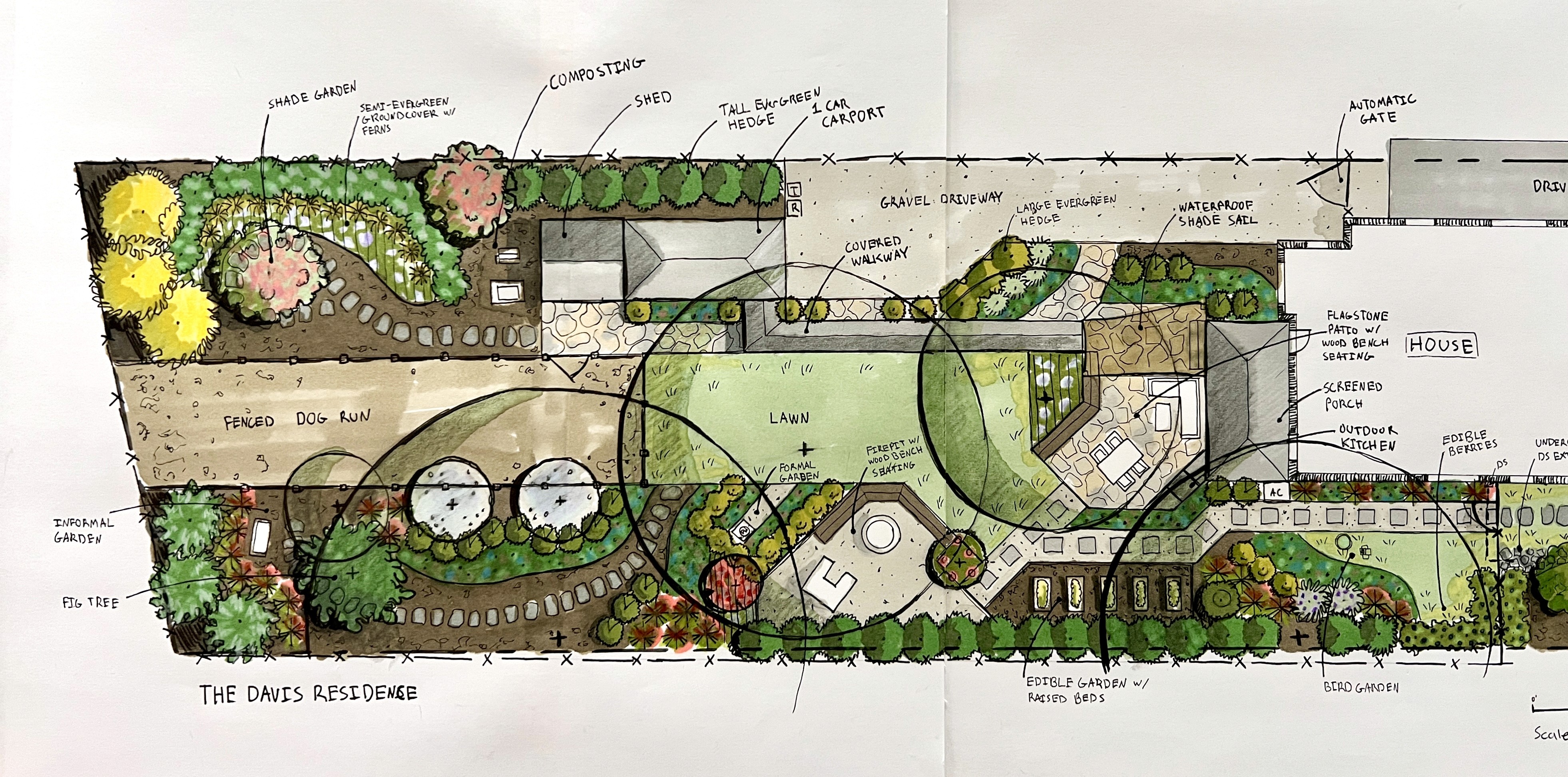
Hiring a landscape designer (like me!) can help bring your vision to life while breaking the project into manageable phases that work within your budget.
If you're taking the DIY route, here are a few questions to guide your planning:
How much sunlight does the area receive? Is it full sun, part sun, or mostly shade? Understanding your garden's light conditions will help you select plants that will thrive.
Does the soil stay moist or dry? Pay attention to drainage, especially after heavy rainfall. Some native plants prefer dry, well-drained soil, while others thrive in consistently moist conditions.
How much lawn do you want to remove? You don't have to eliminate it all! Start with an underutilized corner, expand an existing garden bed, or create a new planting area along your property line.
What level of maintenance are you comfortable with? While established native gardens can require less watering and fertilizing than traditional lawns, they aren't entirely maintenance-free. Consider how much time you're willing to spend weeding, pruning, and managing seasonal growth.
What's your budget? Larger plants create a more immediate impact, but smaller plants and plugs are much more affordable when covering a large area. You can also tackle your garden in phases, expanding it over several seasons.
Removing the Lawn
Once you've settled on a plan, it's time to prepare your planting area!
There are several ways to remove existing turfgrass. One of the simplest, chemical-free methods is sheet mulching, which involves covering the grass with overlapping cardboard (you can strip plastic tape of your shipping boxes or use heavy-duty floor protector paper rolls from your hardware store) and a layer of organic mulch. Over time, the grass breaks down beneath the material, creating an area ready for planting.

For a quicker transformation, you can manually remove the sod using a shovel or sod cutter. This method requires more physical effort but allows you to begin planting sooner.
Whichever method you choose, make sure to remove or thoroughly suppress existing turfgrass before planting. Aggressive grasses like Bermuda grass can quickly spread into new garden beds if not properly managed.
Choosing Your Native Plants
One of the most exciting parts of creating a native garden is selecting plants!
Here in Georgia, we have an incredible variety of native trees, shrubs, grasses, and flowering perennials that can bring seasonal interest to our landscapes while supporting local wildlife.
Some of my favorites include:
Little Bluestem (Schizachyrium scoparium): A beautiful ornamental grass with blue-green foliage that turns coppery orange in fall.
Switchgrass (Panicum virgatum): An ornamental, deep-rooted grass that is dominant in prairies and meadows.
Foxglove Beardtongue (Penstemon digitalis): Delicate white flowers that attract native bees.
Purple Coneflower (Echinacea purpurea): A cheerful summer bloomer that attracts pollinators and provides seeds for birds.
Aromatic Aster (Symphyotrichum oblongifolium): A fantastic late-season bloomer that provides nectar when many other flowers have faded.
Oakleaf Hydrangea (Hydrangea quercifolia): A versatile native part-sun shrub offering beautiful flowers, fall foliage, and winter interest.
Dwarf Yaupon Holly (Ilex vomitoria): An evergreen native alternative to boxwood that provides year-around structure. You can also make a caffeinated tea from the leaves!
Choose plants suited to your specific site conditions, and consider layering different heights, textures, and bloom times. Incorporating shrubs and grasses alongside flowering perennials creates a garden that looks intentional and provides interest throughout the year.
Start Small, Grow Over Time
You don't need a sprawling meadow to make a difference. Even a small native garden can provide valuable resources for pollinators, birds, and other wildlife.
Start with one garden bed, observe how the plants grow, and expand when you're ready. As your garden matures, you'll begin to notice the little things: butterflies visiting your coneflowers, bees buzzing around your asters, and birds feeding on seedheads in the fall.
These are the moments that make gardening so rewarding. The goal isn't necessarily to eliminate the lawn, but to make room for a little more life.
And if you're in the Atlanta area and need help turning your lawn into a beautiful, ecologically beneficial garden, I'd love to help you get started! Book a free consultation to talk through your project with me.
Photo by Wojciech Wyszkowski on Unsplash

Want to upgrade your lawn to a native wildlife paradise?
Schedule a free 15-minute consultation, no pressure or obligation.