Native Shrub Alternatives to Non-Native Landscaping Favorites in Georgia

Wanting to convert your garden into a sanctuary for wildlife, but still like the look of some non-native shrubs? Here are some of my favorite substitutions for popular non-native plants sold at big box stores, like boxwood, butterfly bush, and more!
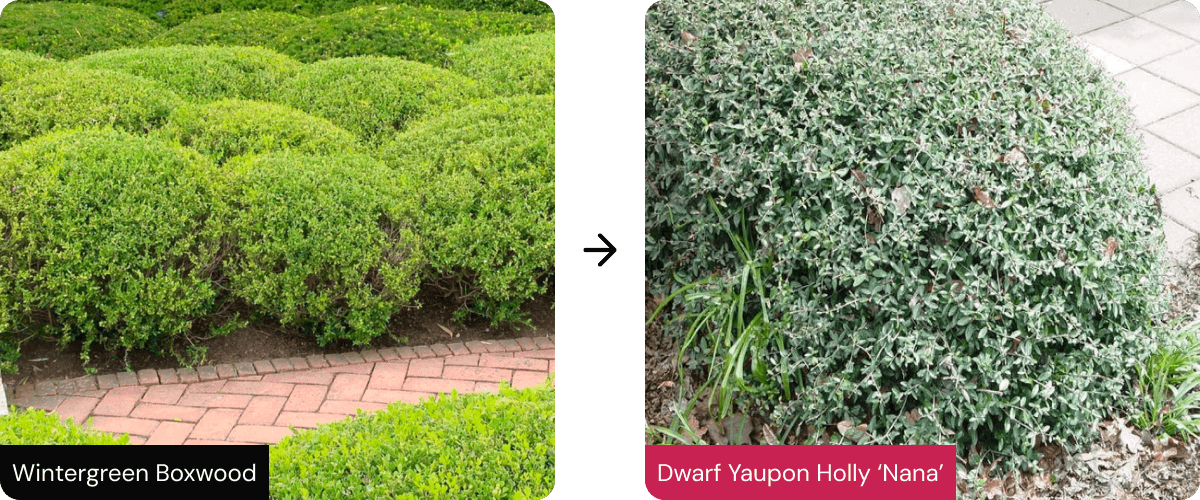
Boxwood -> Yaupon Holly
Boxwoods (Buxus) are a popular evergreen hedge sold in most stores that are native to Europe, Asia, and parts of Africa. They are commonly used as evergreen foundation plantings, topiary statements, or garden borders because of their versatility and ability to shear into different forms.
Swap Boxwoods for Yaupon Holly (Ilex vomitoria), which are native to the southeast and have the same dense texture as boxwoods. They are evergreen, grow in multitudes of different soil, easy to train and shear like boxwoods, and produce small berries in the winter for birds to feed on. They are naturally mounding if you want a more naturalized informal garden, or they can be placed in formal gardens and sheared into neat shapes. Cultivars, like the Dwarf Yaupon Holly, stay compact and under 5ft. And fun fact: you can make caffeinated tea out of their leaves, so it's perfect for an edible garden!
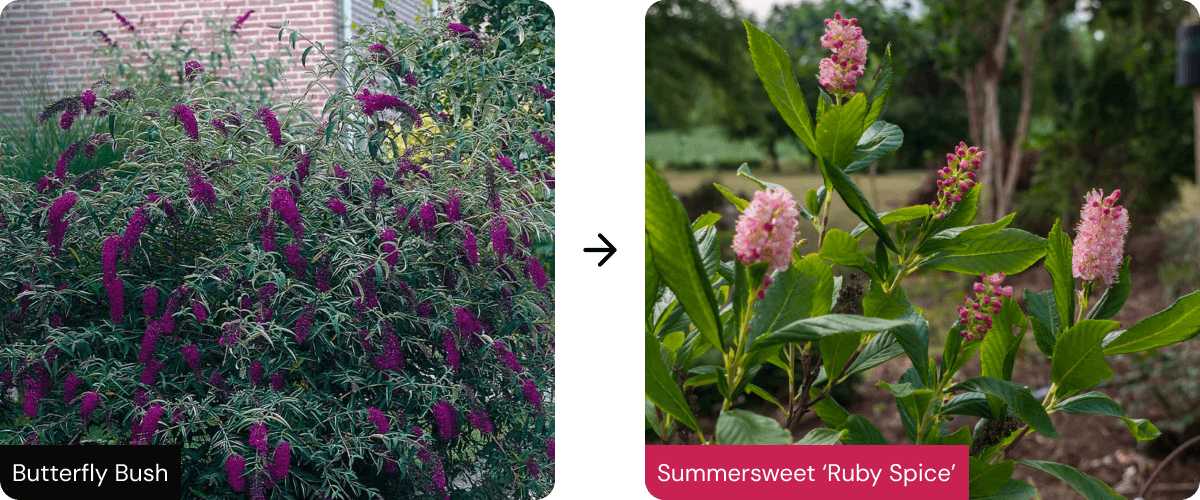
Butterfly Bush -> Summersweet or Swamp Milkweed
Butterfly bush (Buddleja) is native to China and a popular flowering shrub sold widely in many nurseries, prized for attracting pollinators like butterflies, hummingbirds, and bees to its nectar. However, within each flower contains thousands of seeds that can aggressively take over native habitats, and therefore it is deemed as invasive in many areas. While it attracts pollinators, it doesn't host any native caterpillars or insects. There are sterile non-invasive cultivars, but these don't produce nectar that attracts pollinators.
A good substitution that provides both nectar and a home for native insects are Summersweet (Clethra alnifolia) and Swamp Milkweed (Asclepias incarnata).
Summersweet (Clethra alnifolia) is a deciduous shrub native to the southeast that has bottle-brush white blooms that attract a plethora of pollinators. In the winter, the brown seeds that form from the flowers provide food for birds. This shrub prefers moist soil and full to part sun and does not tolerate dry sites. You can plant this shrub as a specimen or as a group to form a hedge. There are cultivars that produce pink flowers, such as the 'Ruby Spice' cultivar.
Swamp Milkweed (Asclepias incarnata) is a perennial flower native to most of North America and spread less vigorously like the Common Milkweed, making it a tame addition to a pollinator garden. Milkweeds are known to be the only host plant that the Monarch butterfly will lay her eggs, with the caterpillars munching and feeding on the leaves as a food source before they transform. Swamp Milkweed has pretty pink flowers, enjoys full to part sun, prefers moist soil but can adapt to dry soil, and can reach 5ft tall.
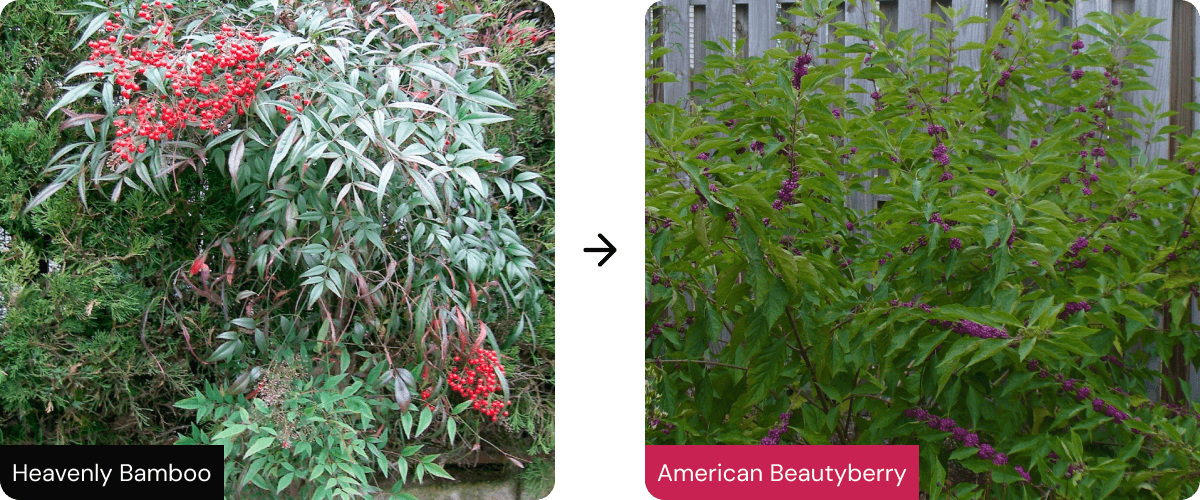
Heavenly Bamboo -> American Beautyberry
Heavenly Bamboo (Nandina domestica), despite its name, is not bamboo and is widely used as a low-maintenance, easy to grow evergreen shrub. Sold in big box stores, many people buy this for the bright red clusters of berries it produces. However, it is now considered invasive in the Southeast, spreading throughout native woodlands and crowding out native plants. The berries have proven lethal to birds likes cedar waxwings. If you observe, you find that no birds will go after the red berries.
A great substitution that provides more wildlife value is my favorite, the American Beautyberry (Callicarpa americana). It is a woody, deciduous shrub that produces clusters of small pink flowers in the summer that become bright purple berries in the fall, providing birds and small mammals with a source of food while also being edible to humans! You can eat the berries and make them into jams. It prefers full to part sun, thrives in most soils, and can grow to be 6-8ft tall and 3-6ft wide.
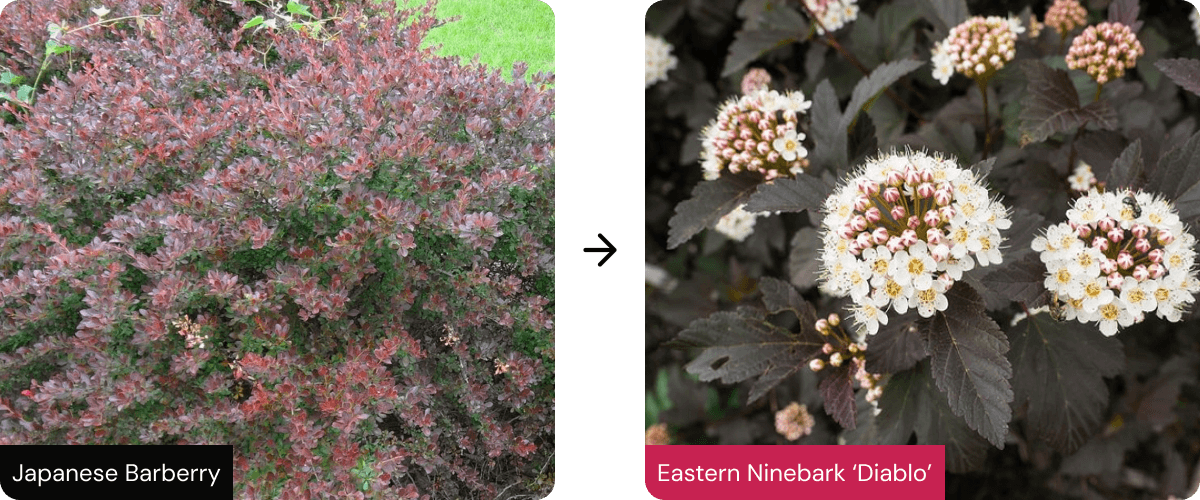
Japanese Barberry -> Eastern Ninebark
Japanese Barberry (Berberis thunbergii) is a popular shrub prized for its purple color, easy care, and thorns, which prevent deer from browsing. However, this plant is becoming more and more invasive, with the sale of it becoming forbidden in more states. It hosts the black-legged deer ticks, which carry Lyme disease. There are sterile cultivars, however, since there is no pollen it provides no value to pollinators.
A great alternative is my favorite, the Eastern Ninebark (Physocarpus opulifolius). It is a deciduous shrub that has a similar growth habit of arching fountain-like stems that produces white flower clusters around 3in wide in spring that pollinators love to visit. It's a tough shrub that thrives in full to part sun (it appreciates afternoon shade in the south) and dry and slightly acidic soil. The bark peels off to reveal reddish to light brown bark, hence its name of having nine layers of bark. You can buy cultivars with more reddish and purple leaves to mimic the Barberry color, however research has shown that insects tend to avoid red-colored leaves for food.
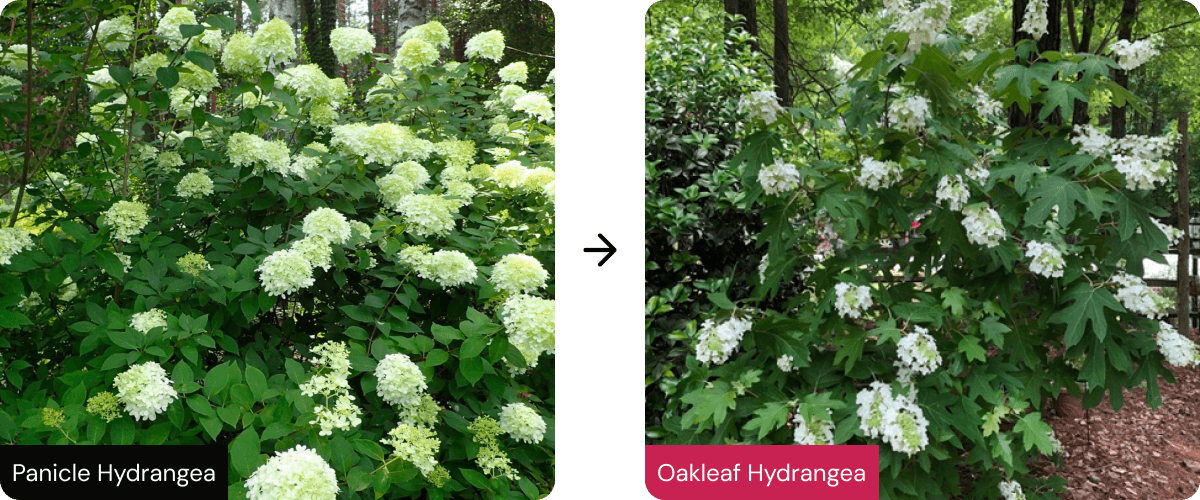
Panicle Hydrangea -> Oakleaf Hydrangea
If you live in the south, most gardeners have at least one hydrangea in their garden! Many hydrangeas sold in nurseries are either Panicle Hydrangea (Hydrangea paniculata) or Big Leaf Hydrangea (Hydrangea macrophylla). The flowers cary from white to pink to blue, depending on the cultivar you buy. These hydrangeas decend from Japan, with Big Leaf Hydrangea being sterile and not providing any nectar to pollinators.
Oakleaf Hydrangeas (Hydrangea quecifolioa) are native to the Southeast that feature large, dramatic panicles of white to cream-colored flowers. The flowers transform to pink and then brown as the seasons pass with its leaves turning a beautiful red in the fall before revealing shaggy bark in the winter. It grows best in rich, well-drained soil and thrives in full to part sun. You can use it as a specimen to highlight its beauty, or you can plant them in masses to form a edge around foundations or fence lines.
Sources:
"Plant This, Not That: Over 200 Native Plant Swaps for a More Sustainable, Pollinator-Friendly Garden" by Elise Howard

Want to upgrade your lawn to a native wildlife paradise?
Schedule a free 15-minute consultation, no pressure or obligation.